

Examples
Maps and finders built on the collection centre API
Every pathology collection centre in Australia, every lab network, through one endpoint. Here is what people have built on it: our own two examples with the prompts and code behind them, and the finders our partners run for their clients. Build one, and send us the link.
Example 1: a finder, two panes and a map
Search by suburb, postcode or centre, filter by state, lab and provider, sort nearest first, open a centre for the full week, get directions. Built with a coding assistant and the Eirly developer MCP in one sitting; the prompts are on the guide.
Example 2: the whole network on one map
The scene from our home page: every collection centre on the platform as a point, the lab hubs by network, samples moving to the labs. The same data, drawn as a picture instead of a list. It is one request for every centre (count up to 10,000), plotted on a projection of Australia, with the hubs placed by hand.
Every collection centre on the platform, drawn from the API
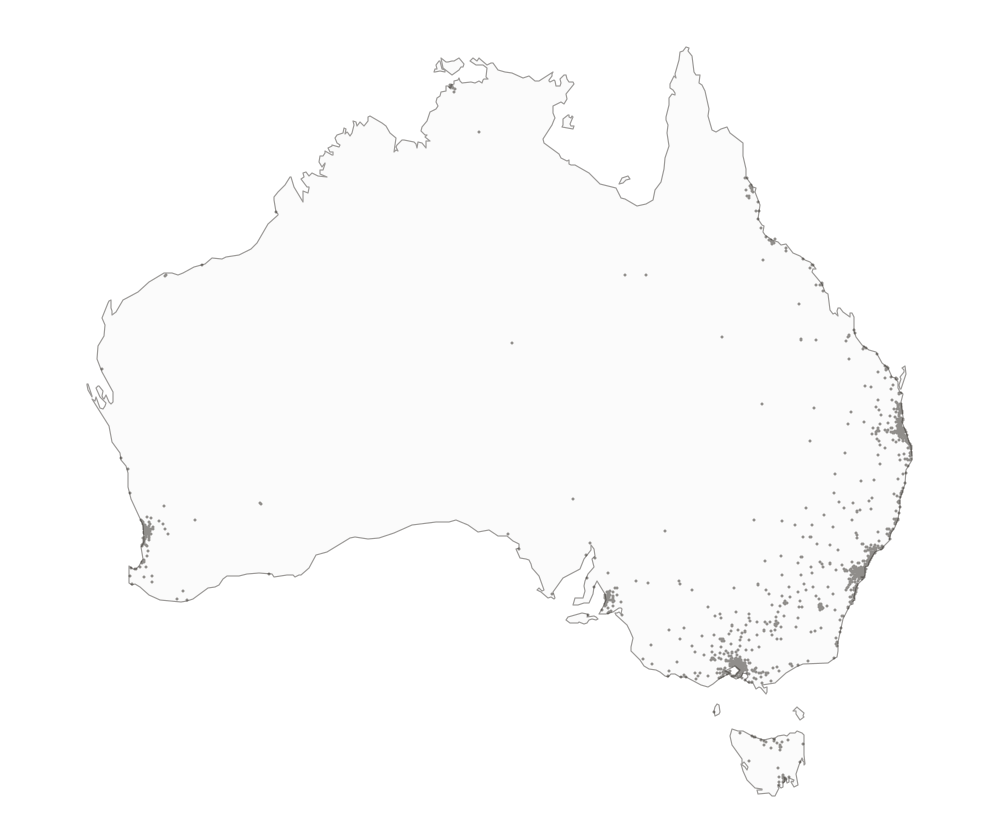

How to draw it: ask the MCP for the contract of GET /v1/collection-centres, request every centre with count=10000, keep lat, lng and vendorId, project with a simple equirectangular transform, and animate samples from a sample of points to the hub of their vendor. The home page version is in the site's open source and the docs describe the endpoint.
Finders our partners run
Vively
A two-pane finder with a clustered map, provider logos and a full-week view, for Vively's members. centres.vively.com.au
Mosh
Mosh's collection centre map for its patients, live since 29 October 2026. centres.getmosh.com.au
Moshy
The same finder for Moshy's patients. centres.getmoshy.com.au
Each is listed with the partner's agreement. Their designs are their own; what they share is the data underneath.
Submit your map design and link to us
Built a finder or a map on the collection centre API? Send us the link and we will list it here with a credit and a link to your site. In return we ask for one line on your page, "Built on the Eirly Health collection centre API", linking to this page or the guide, so the next builder finds the prompts too.
What to send
The public link, your company name as you want it shown, one sentence on who it is for, and the line you added.
Where to send it
Through the contact page, subject \"Finder submission\". We reply with the listing once it is up.
What we check
That it runs on the API, that the data is shown as the labs publish it (hours, notes), and that there is nothing on the page that could mislead a patient.
Frequently asked questions
Yes. The collection centre endpoints are part of the same API and credentials; you can call only those. Staging is free to build in; production needs a plan.
The API refreshes each lab's listing weekly and carries a lastSeenAt on every centre; a webhook tells you when a refresh changed something. The examples on this site run on data pulled from the API at each deploy, and say so.
Every finder that runs on the API and shows the data as the labs publish it. We do not list a page that could mislead a patient about where or when to attend.
Keep reading
- Build a finder with the Eirly MCP
The prompts, the MCP answers, the code shape, the styling options.
- Pathology booking API
Create the referral, find the nearest centre, get the result, in one API.
- Collection centres by state
The network, state by state.
- All how-to guides
Getting up and running, by type of organisation.
Build yours in an afternoon.
Connect the MCP, copy the prompts, point the server-side call at staging with your own keys, then send us the link.